

Key Takeaways
·The right ag loan depends on what you’re financing, not one default product.
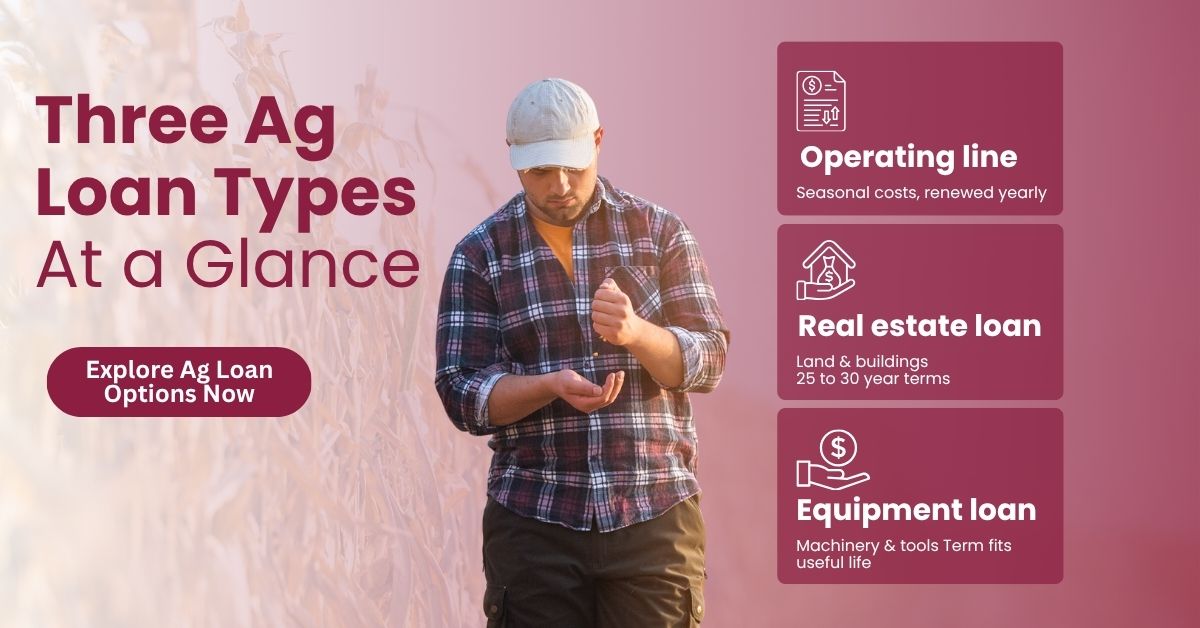
·Operating lines of credit cover seasonal costs like seed, fertilizer, and livestock feed.
·Farm real estate and equipment loans fit long-term land and machinery purchases.
·Stillman’s ag lenders can match FSA and state loan programs to your farm’s needs.
An “ag loan” isn’t one product. It’s a whole toolkit, and the right piece of that toolkit depends entirely on what you’re financing: a season’s worth of crop and livestock inputs looks nothing like a farmland purchase or a new combine on paper, and each calls for a different kind of loan. Stillman Bank has more than 140 years in northern Illinois agriculture, with a team of lenders who grew up in agriculture and are rooted in the local community. Let’s match your options to your next purchase or expense.
Operating Lines of Credit: For Seasonal, Recurring Costs
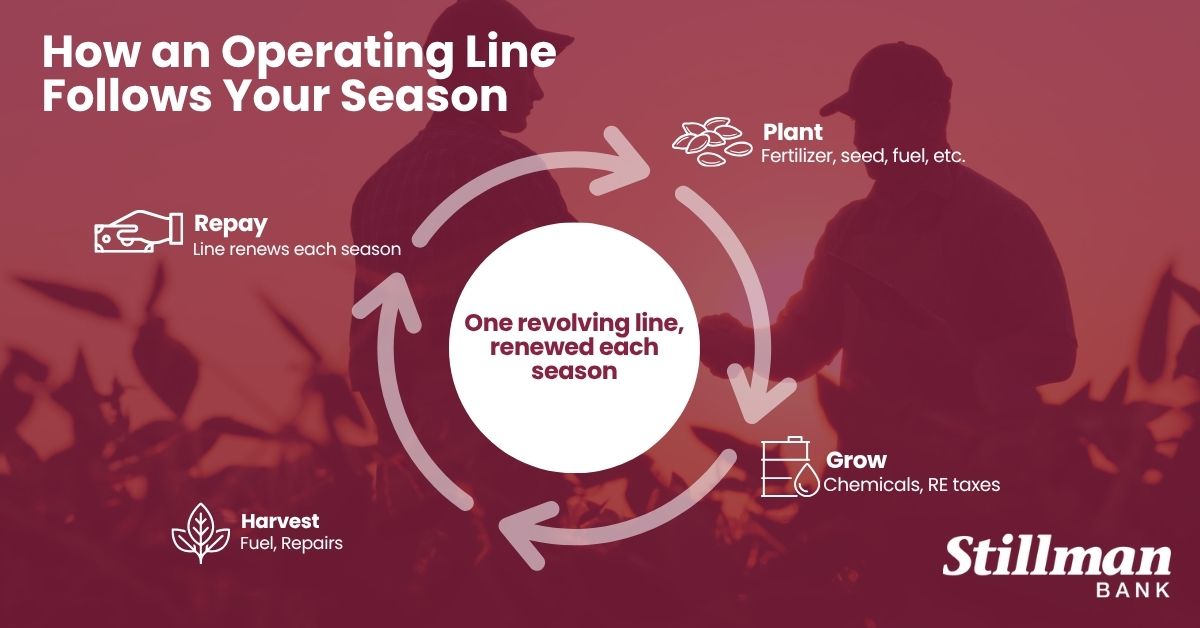
The agricultural season is a continuous cycle that revolves around the growing season, and the need for capital that rises and falls along with it. The costs of seed, fertilizer, feed, and fuel seem to be getting higher each season, and it takes nearly a year to see returns on those inputs. An operating line of credit, sometimes referred to as an agricultural line of credit, is a good fit for your recurring costs and expenses. Think of it like a credit card, but with lower interest rates than you would typically get from a business credit card, and it’s typically reviewed and renewed on an annual basis rather than tied to any single purchase. After you set up a line of credit with us, it’ll be there when you need it.
Learn More
Many of our agricultural customers borrow from their line of credit in the spring to get the funds they need for seed, fertilizer, feed, and other expenses. You can also use it to cover any unexpected expenses, such as equipment breakdowns, veterinary costs, or surges in feed, fertilizer, and fuel costs. You can borrow what you need, up to your credit limit, and you only pay interest on what you borrow, starting from the moment you access your funds. Lines of credit are usually revolving, meaning that once you pay back the balance, you can borrow again until maturity. It’s an effective way to manage your operating expenses and provide you with an emergency supply of funds that you could access at any time.
Farm Real Estate Loans: For Land and Buildings
Where an operating line of credit is built to bridge the seasonal ebb and flow of cash, a farm real estate loan is a different kind of tool entirely: a long-term investment in the ground you farm. For longer-term investments such as buying farmland, expanding your acreage, or buying or constructing a new farm improvement, an agriculture real estate loan lets you expand your operations with longer-term loans with terms that could last 25 to 30 years.
Ag real estate loans, also known as farm ownership loans, typically start out with fixed interest rates for a given period (such as five years), and rates fluctuate after that depending on market conditions. These types of agricultural loans not only give you the funds you need to buy or expand a farm, they also let you build equity. Once your loan is paid off, you’ll have an asset that you can pass on to the next generation. You also won’t have to worry about losing a lease agreement or dealing with rent increases as land values rise.
Farm Equipment Financing: For Machinery That Pays for Itself Over Time
We know how expensive farm equipment can be. That’s why we offer agricultural equipment loans with terms that line up with the useful life of the equipment you need to buy, and the equipment itself serves as collateral so you can buy the tractors, combines, farm vehicles, and trailers you may need. We offer ag equipment loans with fixed or variable interest rates, depending on your needs. Not only do these loans help you run your operations more efficiently, once your loan is paid off the equipment can be an asset that you might use as collateral to secure additional loans.
The Tax Advantages of Agricultural Loans
Because agricultural loans are a type of business loan, the interest payments on them are typically tax-deductible for loans that are used to cover your operating expenses, and to buy land, equipment, real estate, and livestock. You might also deduct the full purchase price of farming equipment for the same tax year that it’s placed in service. For tax year 2026, Section 179 deductions allow up to $2,560,000 for new and used equipment, with the deduction phasing out once your equipment purchases for the year exceed $4,090,000. Certain SUVs are capped at $32,000 under Section 179. Equipment must be used for a farming or business purpose more than 50% of the time.
Because these limits adjust for inflation each year, we recommend confirming the current figures on the IRS Section 179 page and consulting a tax professional to make sure you make the most of these deductions and account for them correctly.
How Stillman’s Ag Team Helps Match the Loan to the Need
Our agricultural lending team has deep roots in the community, and they understand the needs of those in northern Illinois agriculture. Ryan Reeverts was born and raised in Ogle County and is a fifth-generation farmer on his family’s grain and livestock farm. He’s an Ogle County Board Member, Treasurer of the Ogle County Farm Bureau Board of Directors, and is involved with the FFA as a director and volunteer.
Molly Boyd grew up in Hennepin, and works on her family’s dairy farm in Winnebago. She’s also a member of the Ogle County Farm Bureau Young Leaders and is a volunteer for Ogle County 4-H.
Our lenders can help you find an agricultural loan that fits your needs, whether it’s a loan directly from our bank or through the Farm Service Agency (FSA) or the Illinois Ag Invest program.
Getting Started
A little preparation goes a long way toward finding the right loan for your operation. Before you sit down with a Stillman Bank agricultural lender, it helps to know:
- What the funds are for, whether that’s this spring’s inputs, a piece of land, or a new piece of equipment
- Your farm’s financial records, including recent tax returns, a balance sheet, and any relevant production history
- A rough timeline for when you’ll need the funds and when you expect to repay them
The earlier you reach out, the more options you’ll have. Farmers who start the conversation before a need becomes urgent give their lender time to structure a loan around the operation, rather than scrambling to fit a purchase into whatever’s available. Our Agriculture Links to Additional Resources page is also a good place to look up crop budgeting tools, drought conditions, current events in agriculture and while you plan.
Talk to a Stillman Bank Ag Lender Today
Finding the right agricultural loan starts by focusing on your funding needs today and in the future. We know that farming isn’t just a business; it’s a part of our lives and yours as well. Whether you’re just starting out in farming or are part of a multigenerational operation, it can help to work with someone who has deep roots in the community and a first-hand understanding of what farmers need. Matching the loan type to the actual need, rather than defaulting to whichever product is most familiar, is what sets an operation up for a repayment schedule that actually fits.
Talk to a Stillman Bank agricultural lender to set up a free conversation about which loan type fits your farm’s next purchase or expense. Planting the right kind of funding seeds today can help you grow into a prosperous future. With six locations across northern Illinois and loan decisions made locally, we’re ready when you are.