
Deep Roots and Strong Yields: Celebrating Northern Illinois Grain and Livestock Producers
From the pastures of Stillman Valley to the cornfields of Byron and Oregon, grain and livestock producers are the backbone of Boone, Ogle, and Winnebago Counties — and Stillman Bank has been their financial partner for almost 145 years.
Just before sunrise on a summer morning, the fields are already awake. Livestock drift across the pasture toward their morning grazing, and in every direction rows of corn and soybeans stretch toward a sky that’s just beginning to turn gold. It looks effortless, but every producer in Northern Illinois knows the work behind it.
Summer is the make-or-break season. These are the months when crops are growing and livestock are grazing, when everything set in motion before planting either pays off at harvest or doesn’t. Bringing a crop to harvest and livestock to market takes year-round dedication, long days, and a willingness to weather everything from drought to falling prices.
Stillman Bank has stood alongside local producers through all of it. For almost 145 years, we’ve done more than cheer for agriculture from the sidelines. We’ve been an active partner in helping the families who feed our communities keep their operations strong season after season.
The Economic Impact: The Backbone of Our Counties
Grain and livestock operations aren’t just a way of life in Boone, Ogle, and Winnebago Counties — they’re an economic engine. Across the three counties, more than 2,000 family-owned farms work more than 640,000 combined acres of cropland and pasture, generating hundreds of millions of dollars that ripple through the local economy.
And it isn’t only the farms themselves. A healthy agricultural sector keeps the local grain elevators running, the equipment dealers and service centers in business, and the local cooperatives open. These businesses depend on one another.
Roughly 96% of Illinois farms are multi-generational, family-owned operations. As many of today’s farmers approach retirement and the next generation weighs whether to take over, that foundation matters more than ever, which is exactly why local banks like Stillman are here to support them.
2026 Challenges: Navigating the Margin Squeeze
Plenty of industries have felt the strain of a volatile economy, but few feel it as sharply as agriculture. For grain and livestock producers, the squeeze comes from both directions at once: the cost of doing business keeps climbing while the price of what they produce often doesn’t keep pace.
On the input side, fertilizer, fuel, and equipment repairs continue to pressure the bottom line. Add the unpredictability of weather and the swings of the livestock markets, and it’s clear why balancing the cost of purchasing inputs against the risk of not buying them, has become the top priority for producers this year.
The pressure has grown serious enough that producers are taking it to Washington. In a recent nationwide survey from the American Farm Bureau Federation, most farmers reported they can’t afford fertilizer at today’s prices — a stark measure of how tight margins have become.
These are only a few of the forces bearing down on producers right now, which is why staying informed is part of staying solvent. Stillman Bank maintains a comprehensive list of Agricultural Links so you can keep ahead of the shifts that affect your operation.
The Solution: Financing the Seasonal Cycle
The broader picture is challenging, but it’s far from hopeless and the right financing can change how a season plays out. For a grain and livestock operation, few tools are as valuable as an agricultural line of credit.
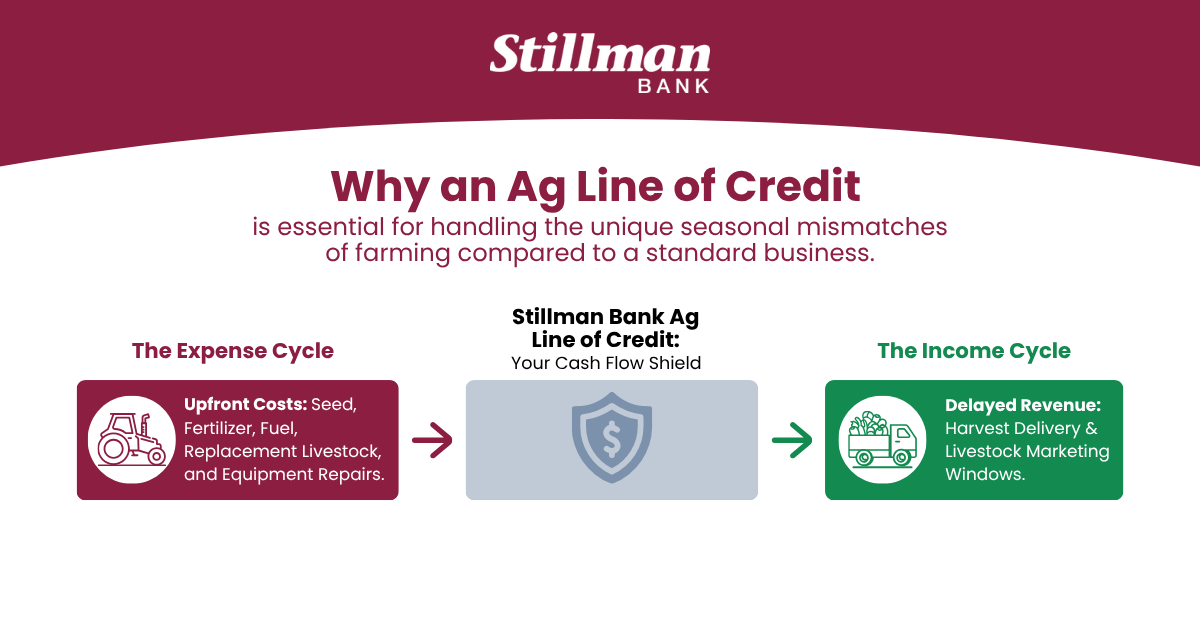
Here’s why. Unlike a business with steady daily revenue, crop and livestock farming runs on a deep seasonal cycle: heavy expenses up front, and a payout that doesn’t arrive until harvest or market day. A line of credit bridges that gap. It’s what lets you lock in an early seed discount, cover an unexpected equipment repair in the middle of planting, or buy feeder cattle when the timing is right — without waiting on revenue that’s still months away.
And because Stillman Bank is a local community bank, those decisions get made right here in Northern Illinois, by people who know this ground, not in a skyscraper three states away.
What Is Working Capital?
Working capital is the cash and liquid assets your farm has on hand to fund day-to-day operations — inventory, payroll, repairs, and the rest. Many producers don’t realize that the rising value of their assets can be the key to unlocking that cash flow through the right financing.
Plan Before You Borrow
Before you sit down with a Stillman Bank Agricultural Loan Officer, a little homework goes a long way toward finding the right mix of products for your operation:
- List your owned assets, such as equipment, facilities, and anything else that could factor into your asset pool.
- Organize your debt into categories so you can set a plan for how borrowed funds get put to work and prioritize spending.
- Benchmark your operating costs against the University of Illinois farmdoc cost estimates to forecast expenses and returns.
Walk in with that information as you can and you’ll have a more productive conversation — and a loan built around your operation, not a one-size-fits-all product. It’s the kind of partnership farmers have trusted Stillman Bank to provide for more than 140 years.
Agricultural Loans
Stillman Bank offers a full portfolio of agricultural loans designed to keep farms running smoothly:
- Production and operating lines of credit
- Hedging account lines of credit
- Fixed- and variable-rate equipment loans
- Livestock purchase financing
- Fixed- and variable-rate farmland real estate loans
- FSA Beginning Farmer and Guaranteed loans
- Illinois Ag Invest Program Loans
If you’re not sure where to start, two options are especially popular:
- Production and operating lines of credit. Think of this as your strategic reserve: cover upfront input costs and pay off the note after harvest delivery or market day. For many farmers, it’s the lifeline that keeps the operation growing.
- Equipment loans. Tractors, skid steers, and the rest of your machinery are essential, and an equipment loan provides you the opportunity to update equipment to fit the needs of your operation.
Agricultural Services
Not everyone loves the bookkeeping side of farming — and you don’t have to do it alone. Stillman Bank offers agricultural services that take the pressure off and can be added on top of your loans:
- Break-even analysis by enterprise — cash grain, livestock, or a combination of both
- Customized cash flow analysis
- Solicited consultations when making the next big management decision
Meet the Experts: Your Neighbors in the Field
Behind every loan at Stillman Bank is a team that understands farming from the inside out. Our Agricultural Loan Officers don’t just read spreadsheets, they know what it takes to run an operation in Northern Illinois, because this is home for them too.
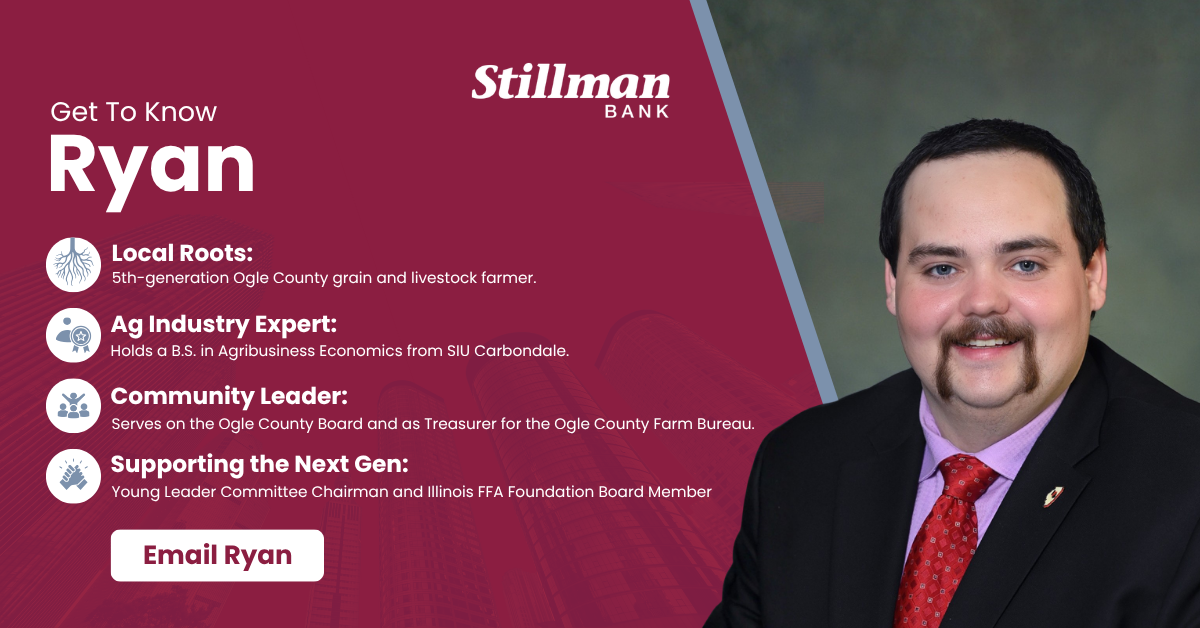
Ryan Reeverts
Ryan is a fifth-generation farmer who grew up right here, working his family’s grain and livestock farm in Ogle County. As an Agricultural Loan Officer, he’s involved in every phase of ag lending and he understands your operation because he’s lived it, from the tractor cab to the feedlot. Ryan also serves on the Ogle County Board, chairs its Young Leader Committee, sits on the Illinois FFA Foundation Board of Directors, and volunteers with the Illinois FFA and local FFA chapters.
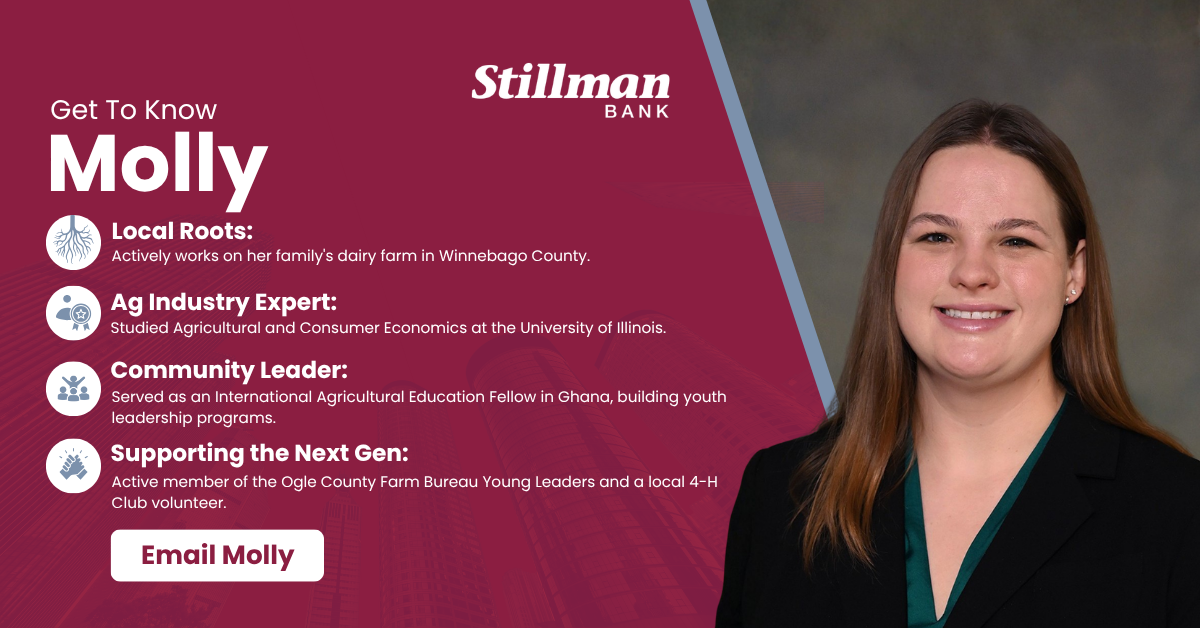
Molly Boyd
Molly serves as an Agricultural Banking Representative and brings a background in agricultural and consumer economics from the University of Illinois. She’s an active member of the Ogle County Farm Bureau Young Leaders and volunteers with Ogle County Extension, staying close to the next generation of farmers she’s helping support.
Stillman Bank is proud to support the next generation of Northern Illinois farmers. If you’re planning for your farm’s future, partner with a bank that knows your land, your work, and your community for more than 140 years. Contact Ryan and Molly to schedule a time to talk through your financial needs and working capital.